
A Manual for the Use of the General Court, 1886
- Creator
- Commonwealth of Massachusetts
- Date
- 1886
- Type
- book
- Repository
- Internet Archive (manualforuseofge1886mass); a copy is in the house library
- Locator
- Cited pages: scan leaves 237, 318, 439, 478, 495
- Access
- Public domain. The title page and the pages cited on this site are reproduced here from the copy in the house library; the whole volume can be read at the Internet Archive. Read the source · Original at archive.org
- Rights
- Public domain (published 1886).
Read the source
Open the first pageOriginal at archive.org
The title page and the 5 pages this site cites (6 page images), cut from the scanned book. A Manual for the Use of the General Court, 1886, Commonwealth of Massachusetts. Internet Archive scan manualforuseofge1886mass; copy in the house library. Public domain (published 1886). This copy is kept on this site so that it stays one click away.
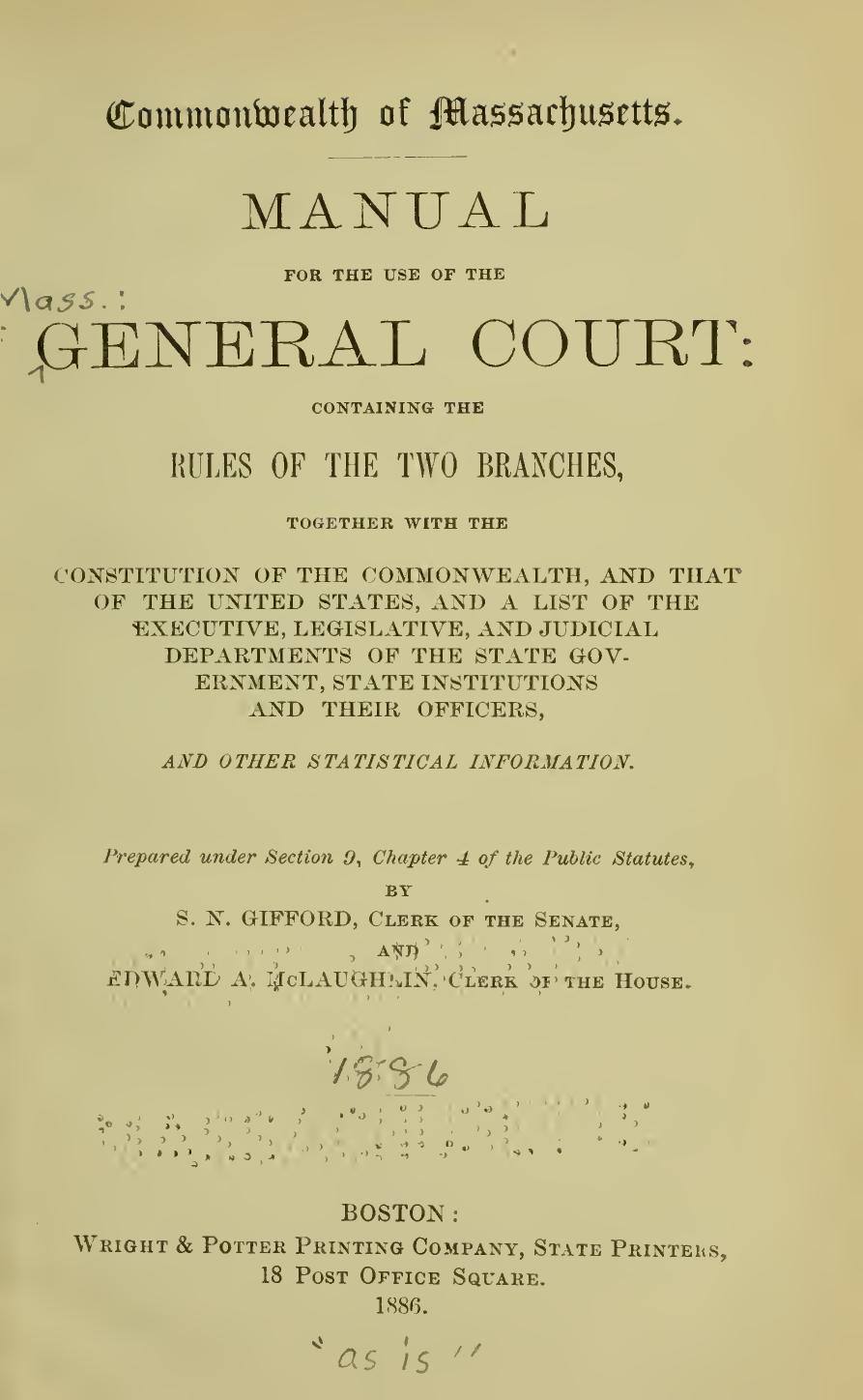 Title page
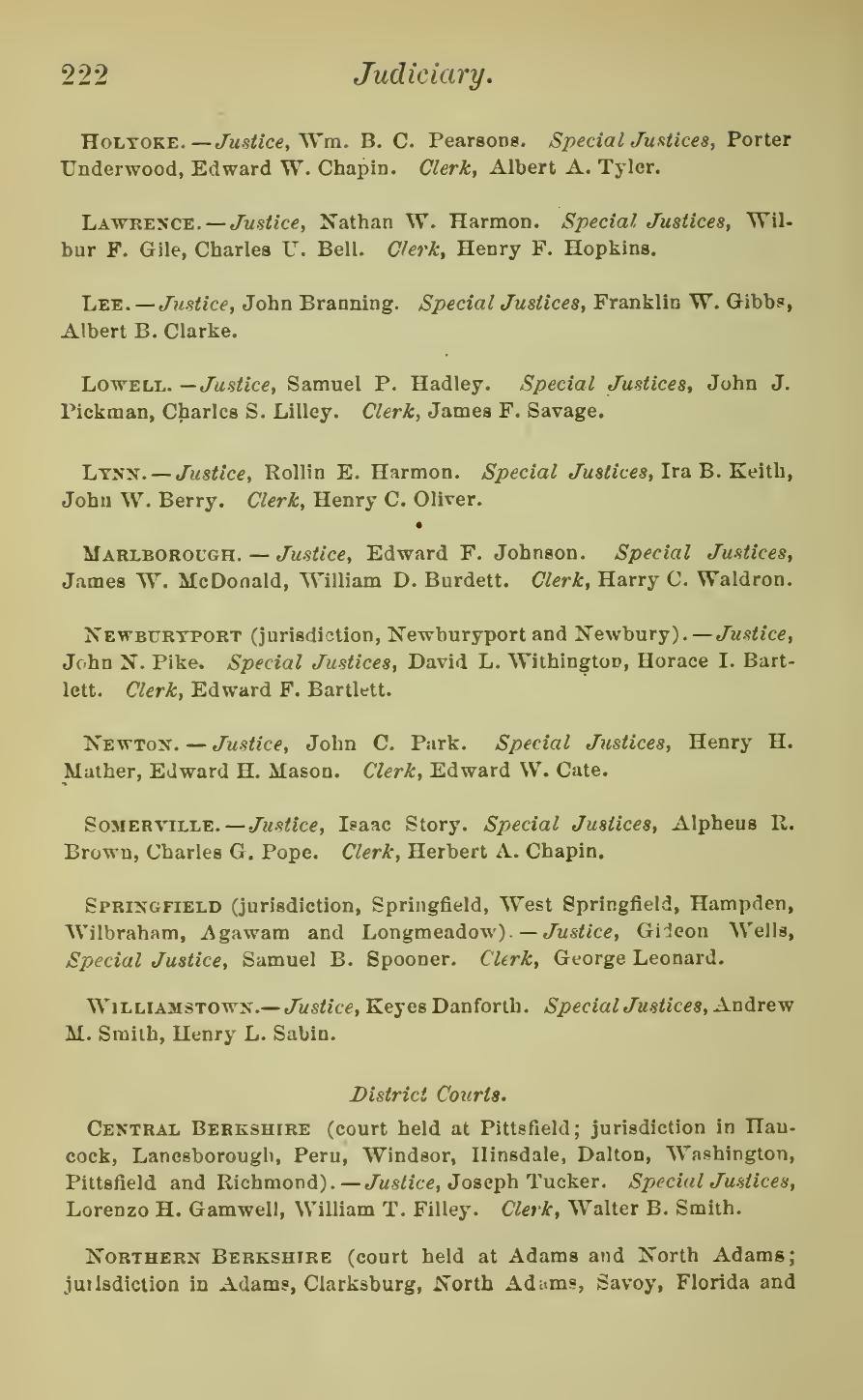 p. 222 (leaf 237 of the scan). Cited in note C-195.
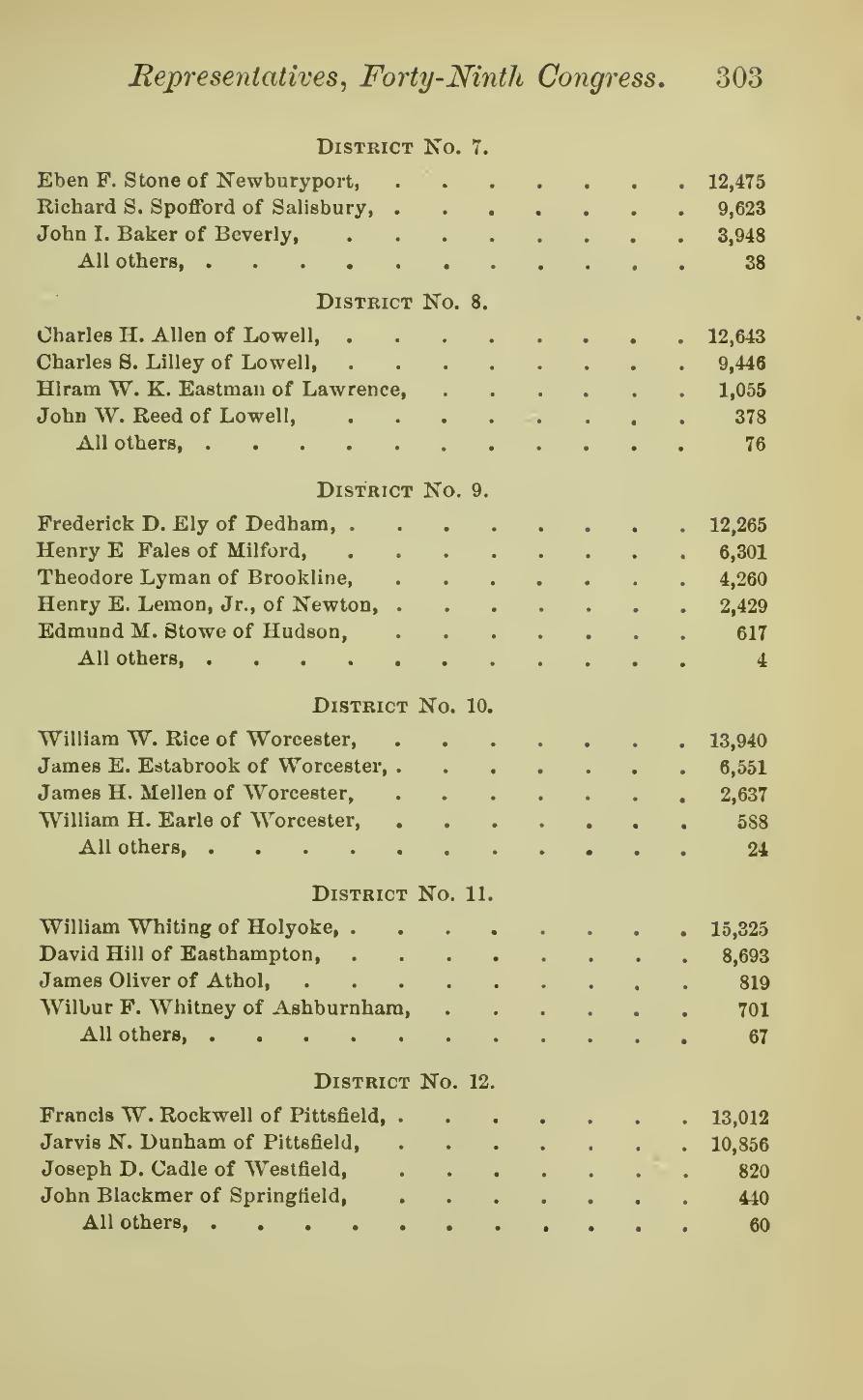 p. 303 (leaf 318 of the scan). Cited in note C-193.
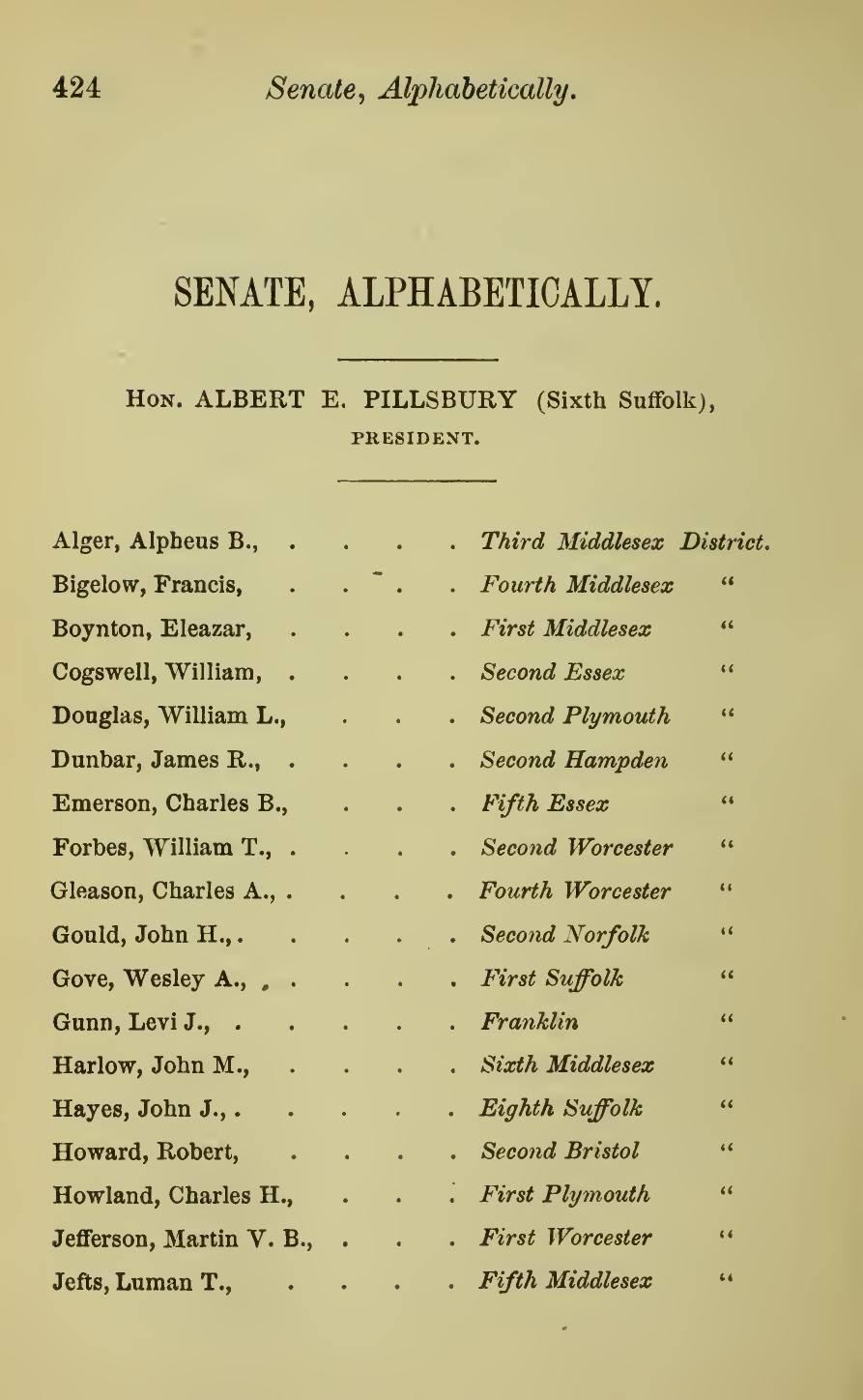 p. 424 (leaf 439 of the scan). Cited in note C-203.
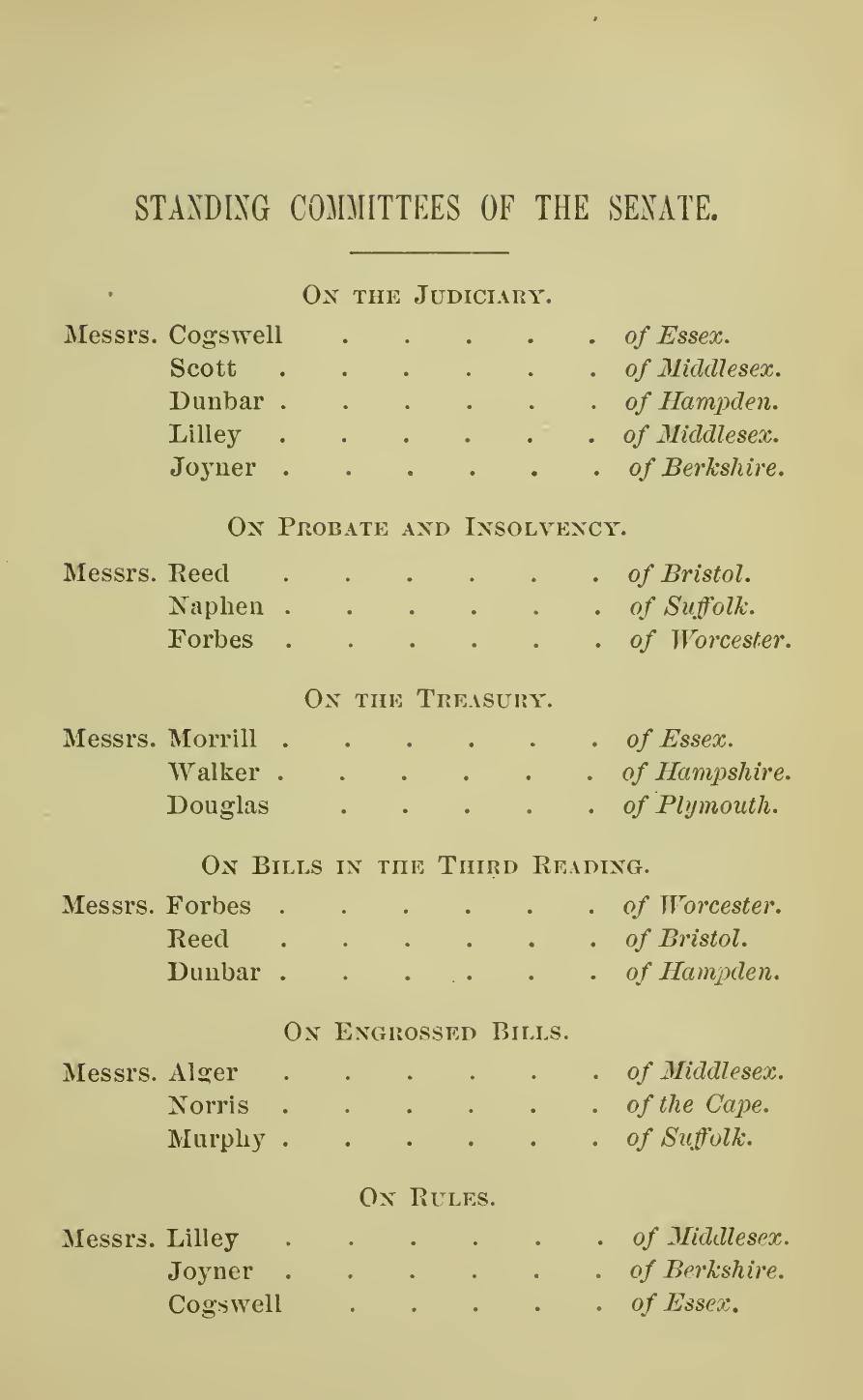 p. 463 (leaf 478 of the scan). Cited in note C-192.
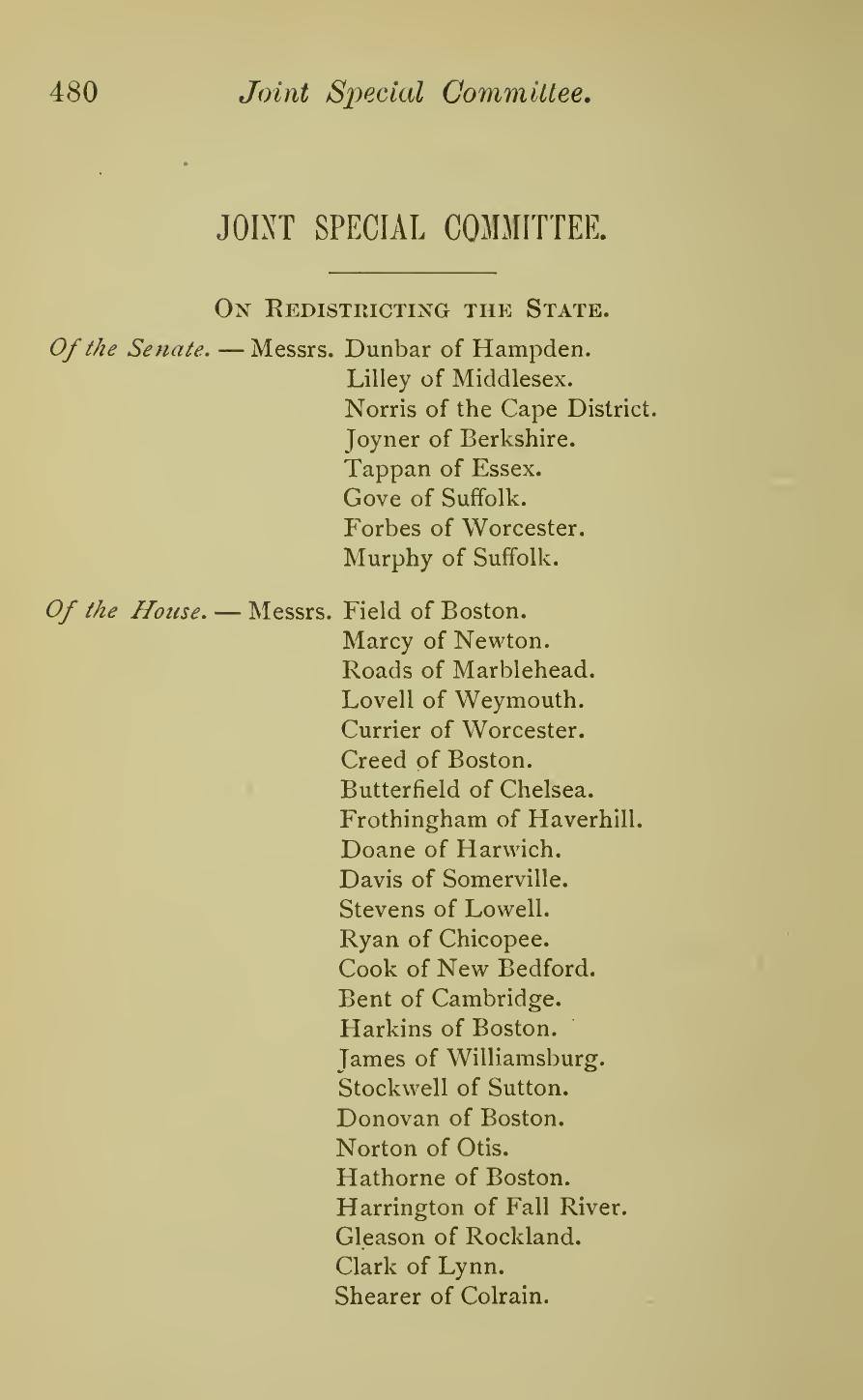 p. 480 (leaf 495 of the scan). Cited in note C-203.
Statements this record supports
- C-192 — In the state Senate Lilley sat for the Seventh Middlesex district on Probate and Chancery and on Bills in the Third Reading in 1880; in 1881 on the Judiciary, and as chairman of Probate and Chancery and of Bills in the Third Reading; and in 1886 on the Judiciary, Street Railways and the joint special committee on redistricting the state, and as chairman of the committee on Rules.
- C-193 — Lilley ran three times for office beyond Lowell as a Democrat and lost each time: for Congress in the Eighth District in 1882 (10,743 votes to William A. Russell's 11,269) and in 1884 (9,446 to Charles H. Allen's 12,643), and for Attorney General in November 1893 (143,214 votes to Hosea M. Knowlton's 192,193). Governor Russell named him to the Superior Court later that month.
- C-195 — Lilley was a special justice of the Lowell Police Court, listed with John J. Pickman under Standing Justice Samuel P. Hadley in 1884–86, and resigned when he was elected to the Senate in 1886.
- C-203 — The Lilleys and the Dunbars were linked a generation before Clara Lilley married Philip R. Dunbar in 1917: Philip's father, James R. Dunbar, sat with Charles S. Lilley in the Senate of 1886, both on the Judiciary committee and the joint special committee on redistricting the state, and the two were later colleagues on the Superior Court (Dunbar 1888–98, Lilley 1893–1900).